
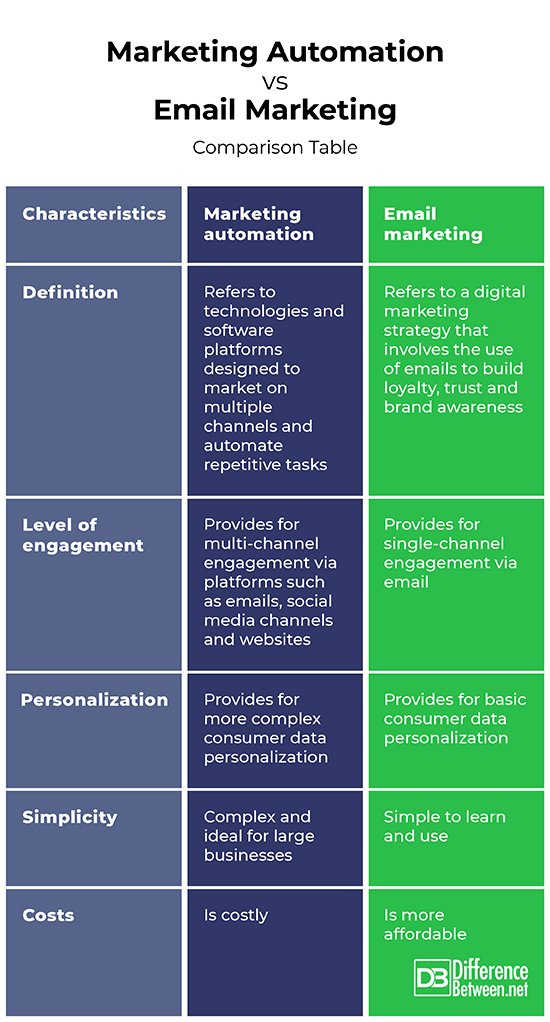
Email marketing sends targeted messages; marketing automation builds automated, multi-step customer journeys.
I’ve helped teams build both email campaigns and automation systems for years, so I know how easy it is to confuse the two. This article explains what is the difference between email marketing and marketing automation in clear, practical terms, with examples, benefits, limits, and step-by-step advice you can use today. Read on to learn how to choose and use the right approach for your business and when to combine both for best results.
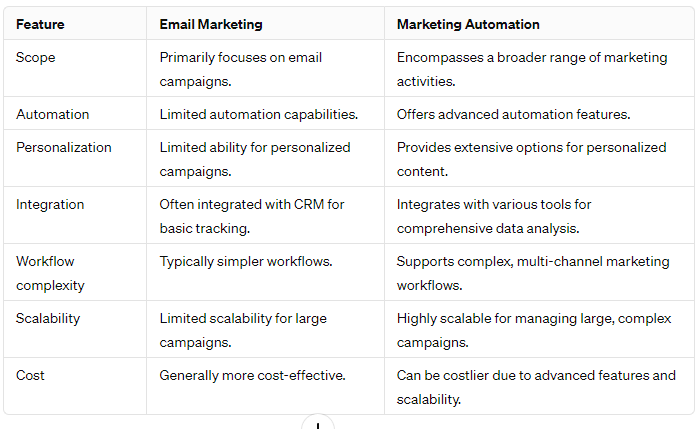
what is the difference between email marketing and marketing automation
Email marketing and marketing automation are related, but they solve different problems. Email marketing focuses on sending messages to a list. Marketing automation focuses on triggering actions across channels based on behavior, rules, or time.
When people ask what is the difference between email marketing and marketing automation, the easiest way to think about it is this: email marketing is a tool for communication, while marketing automation is a system for orchestrating actions. Email can be part of automation, but automation can include SMS, CRM updates, ad retargeting, and scoring leads. Automation creates journeys; email marketing creates messages.

Definitions and core concepts
- Email marketing is sending promotional or informational messages to a list of subscribers.
- It includes newsletters, announcements, offers, and drip sequences sent by schedule or campaign.
- Key metrics are open rates, click-through rates, and unsubscribe rates.
- Marketing automation is software that automates repetitive marketing tasks and customer journeys.
- It uses triggers, conditions, and actions to personalize interactions across email, SMS, web, and CRM.
- Key metrics include conversion rate, lead score changes, and time to purchase.
Understanding these core ideas helps answer what is the difference between email marketing and marketing automation: one is a channel and tactic, the other is a broader methodology and platform for personalization and orchestration.
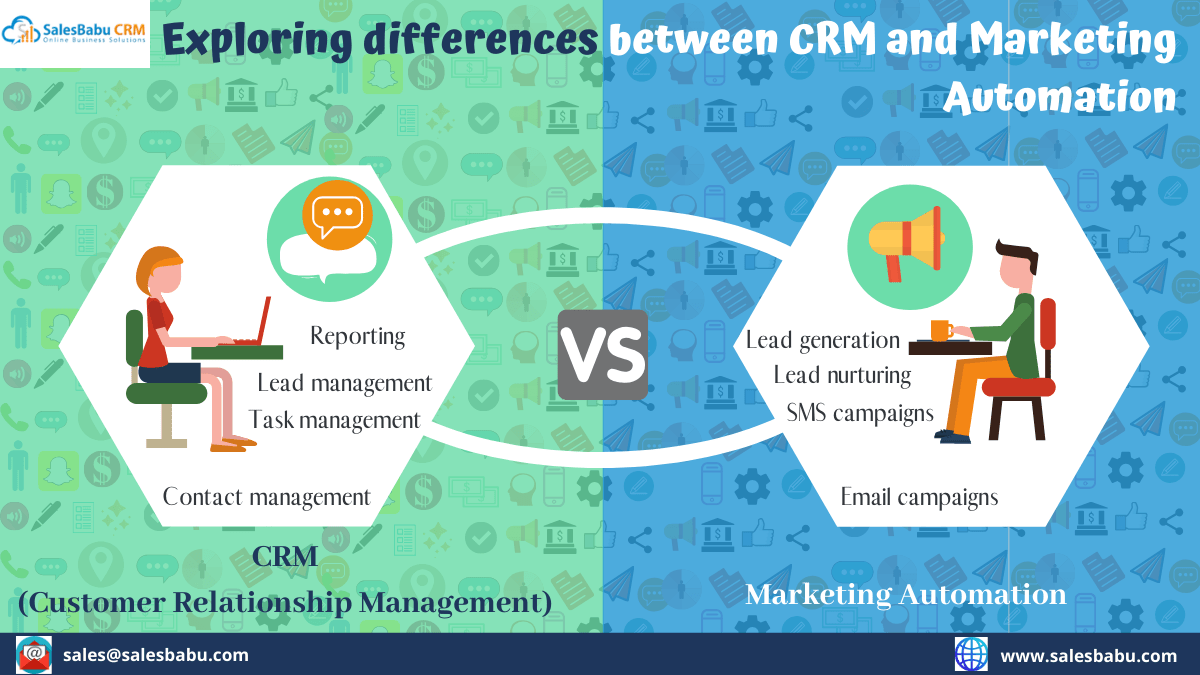
Key differences, side by side
- Purpose
- Email marketing: inform, promote, nurture via email.
- Marketing automation: automate tasks, personalize journeys, connect systems.
- Scope
- Email marketing: single channel focus.
- Marketing automation: multi-channel and cross-system.
- Timing and triggers
- Email marketing: often calendar-based or manual sends.
- Marketing automation: event-driven and real-time triggers.
- Personalization
- Email marketing: can personalize fields and segments.
- Marketing automation: dynamic personalization based on behavior and profile.
These contrasts make it easier to answer what is the difference between email marketing and marketing automation when planning campaigns. Automation elevates email work by making it smarter and more timely.
How email marketing and marketing automation work together
- Capture
- Use forms, lead magnets, and landing pages to collect contacts.
- Segment
- Group contacts by interest, behavior, or demographics.
- Communicate
- Send one-off emails or automated sequences.
- Track and optimize
- Use analytics and tests to improve content and timing.
When deciding what is the difference between email marketing and marketing automation for your team, remember this: automation uses email as one output among many. That means a welcome email, a cart-abandon sequence, and a re-engagement flow can all run automatically and adapt based on user actions.
Use cases and real examples
- Small business newsletters
- Email marketing sends weekly news and offers. Simple and low-cost.
- E-commerce abandoned cart
- Marketing automation triggers an email sequence after cart abandonment, followed by SMS or ad retargeting.
- B2B lead nurturing
- Marketing automation scores leads, hands qualified leads to sales, and updates the CRM.
- Event reminders
- Email marketing sends invites; automation sends reminders based on registration status.
From my experience building flows for startups, automation reduced manual follow-ups and increased conversions. If you ask what is the difference between email marketing and marketing automation in practice, it shows when automation replaces repetitive manual work and increases personalization.
Benefits and limitations
Benefits of email marketing
- Low cost and direct reach.
- Easy to set up for newsletters and promotions.
- Good for brand updates and simple campaigns.
Limitations of email marketing
- Manual processes can be time-consuming.
- Harder to respond in real time to user behavior.
- Can suffer from low personalization at scale.
Benefits of marketing automation
- Scales personalized experiences across channels.
- Automates lead qualification and handoffs to sales.
- Improves timing and relevancy with behavior triggers.
Limitations of marketing automation
- Higher setup complexity and cost.
- Requires quality data and regular maintenance.
- Over-automation can feel impersonal if poorly designed.
If you still wonder what is the difference between email marketing and marketing automation from a cost and effort view, remember: email marketing is quicker to start; automation pays off when you need scale and personalization.
Choosing the right tool for your goals
- Start simple if you need fast results
- Use email marketing for newsletters and simple promotions.
- Move to automation when you need scale
- Choose automation for multi-step journeys, lead scoring, and cross-channel campaigns.
- Consider integration needs
- Make sure email or automation tools connect to your CRM and e-commerce platform.
- Evaluate resources
- Automation takes time to design, test, and maintain.
When teams ask what is the difference between email marketing and marketing automation in terms of tools, I advise mapping one or two customer journeys first. That helps justify the investment in automation and clarifies which email tasks need automation.
Implementation tips and best practices
- Map customer journeys before building
- Sketch touchpoints, triggers, and outcomes.
- Start with high-impact automations
- Focus on welcome flows, cart recovery, and lead qualification.
- Keep content short and conversational
- Short sentences work best in email and automation messages.
- Test and iterate often
- Run A/B tests on timing, subject lines, and content.
- Monitor data quality
- Clean lists and sync fields to keep automation reliable.
From my work leading campaigns, a common mistake is automating too many steps at once. Build one flow, measure results, and expand. This approach makes the practical answer to what is the difference between email marketing and marketing automation obvious: one is tactical, the other is strategic and iterative.
SEO and measurement considerations
- Track goals, not just opens
- Measure conversions, revenue, and engagement per journey.
- Use UTM and analytics
- Tag email links and automation outputs for accurate attribution.
- Segment reporting
- Compare results for automated vs. manual email sends.
- Protect deliverability
- Clean lists and honor unsubscribe requests to keep sender reputation strong.
When you optimize for search and measurement, the question what is the difference between email marketing and marketing automation becomes an operational one: automation requires broader tracking and attribution across touchpoints.
Frequently Asked Questions of what is the difference between email marketing and marketing automation
What is the difference between email marketing and marketing automation?
Email marketing sends messages to subscribers, while marketing automation builds rules and triggers for multi-step, cross-channel journeys. Automation often includes email but adds behavior-driven actions and system updates.
Can email marketing exist without marketing automation?
Yes. Email marketing can run as manual campaigns or scheduled newsletters without automation. Automation becomes useful when you want to personalize or scale interactions automatically.
Is marketing automation only for large businesses?
No. Small businesses can benefit from basic automations like welcome sequences and cart recovery. Complexity and cost scale with the number of integrations and customizations.
How do I start moving from email marketing to automation?
Map core customer journeys, pick one high-impact flow, choose a platform that integrates with your CRM, and build the flow step by step. Test and optimize before expanding.
Will automation replace human marketers?
No. Automation handles repetitive tasks and scaling, but human creativity and strategy are essential for content, segmentation, and testing.
How do I measure success for both approaches?
Track conversion rates, revenue, and engagement for both email and automation. For automation, also track time to conversion and lead score improvements.
Conclusion
Email marketing and marketing automation are distinct yet complementary. Email marketing delivers direct messages; marketing automation creates intelligent journeys that use email as one of many outputs. Choose email when you need simple outreach. Choose automation when you need timely, behavior-driven personalization and scale.
Takeaway: start simple, map one customer journey, and add automation where it removes manual work and improves customer experience. Try building a single automated flow this month and measure lift. If this helped, subscribe, share your experiences below, or ask a question so we can help plan your next campaign.
