
AI app ideas unlock new business value with simple ML, great UX, and real user focus.
I have built and advised on AI products for startups and teams. This guide explains high-impact ai app ideas, how to validate them, and how to build fast, safe prototypes you can scale. Read on to find practical examples, pitfalls I learned from, and clear steps to turn an idea into a working app.
Why ai app ideas matter now
AI is moving from research labs into everyday apps. Simple models can add value fast. Good ai app ideas solve real problems, save time, or create new ways to delight users. Investors and customers both reward AI that works and is usable.
AI adoption is broad. Teams that pick the right ai app ideas early can gain big advantages. I’ve seen small teams ship features that grew engagement by 20% in weeks. That happened because they focused on clear user pain points, not just on flashy models.

Core principles for strong ai app ideas
Build ideas that are useful, feasible, and ethical. Use these principles when choosing which ai app ideas to pursue.
- Start with user need. Find a clear pain point to solve.
- Aim for data you can access. Good data beats fancy models.
- Keep scope narrow. A focused feature ships faster and learns more.
- Plan for privacy and safety from day one. User trust is key.
- Measure impact with simple metrics. Track behavior change, not just accuracy.
These principles will help you filter many ai app ideas into a few that matter. In my work, the best outcomes came from small fixes—like an intelligent autocomplete that reduced clicks by 30%.
Top ai app ideas by category
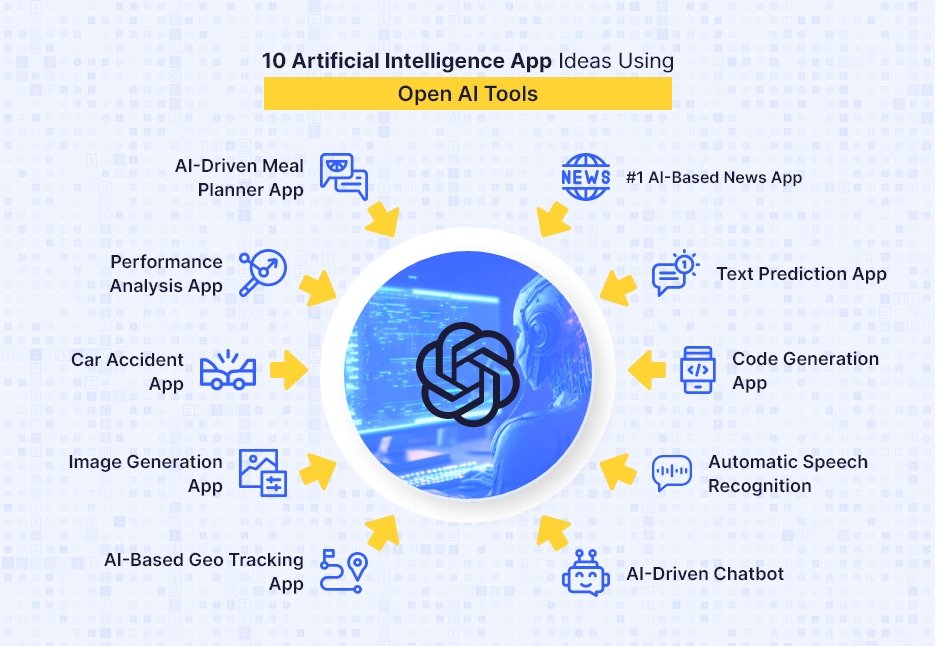
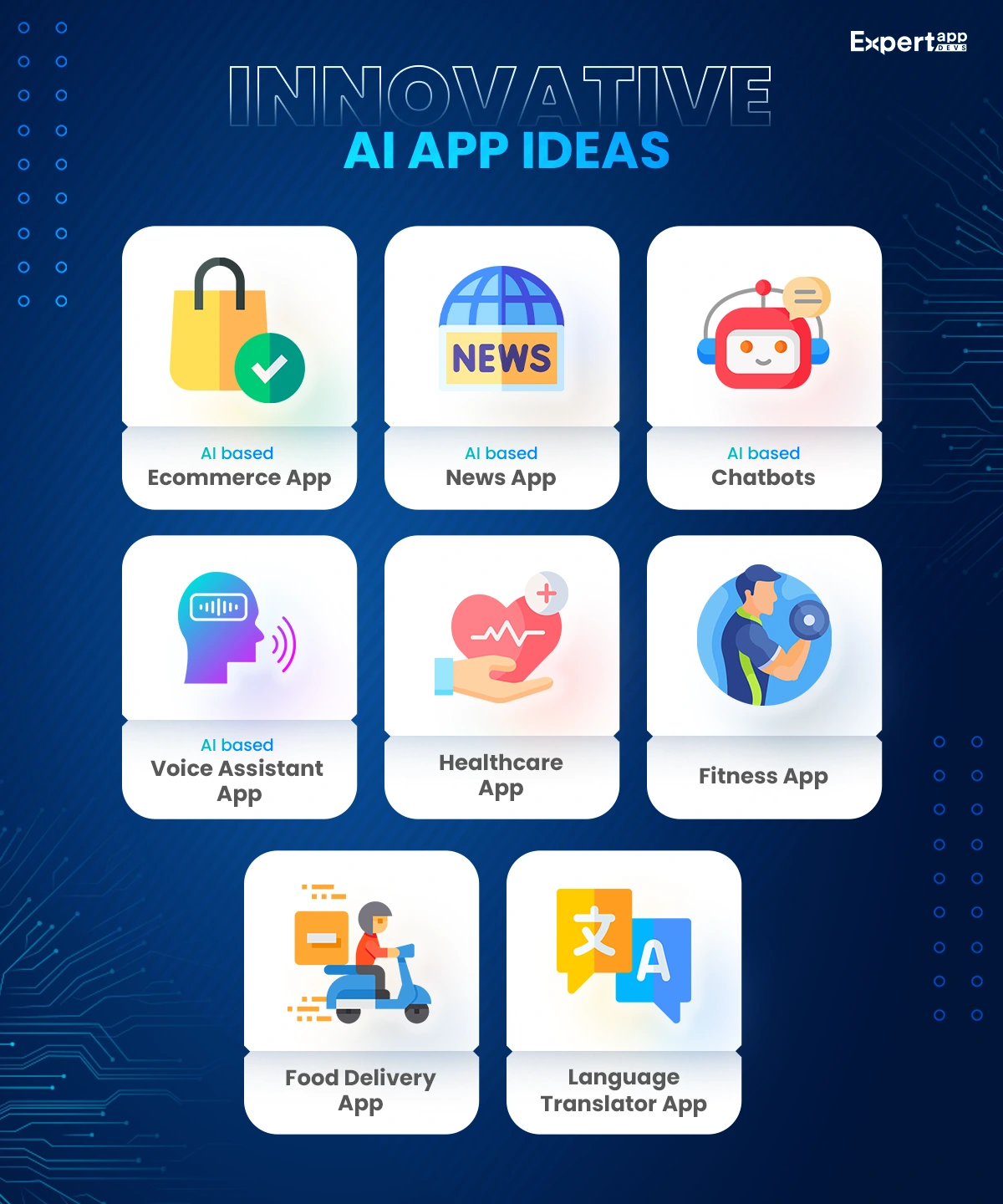
Here are practical ai app ideas you can build now. Each idea includes a short use case and why it matters.
- Content and productivity
- Smart writing assistant that suggests tone, structure, and citations.
- Meeting summarizer that creates short action lists and timestamps.
- Email triage tool that prioritizes and drafts replies.
- Image and media
- Mobile photo enhancer that adjusts lighting and removes clutter.
- Brand-safe image generator for quick marketing visuals.
- Video highlight reel maker that finds key moments automatically.
- Personalization and commerce
- Product recommender that uses behavior and intent signals.
- Dynamic pricing assistant for small e-commerce stores.
- Virtual stylist that suggests outfits from a user’s closet photos.
- Healthcare and wellness
- Symptom tracker with trend detection and clinician-ready summaries.
- Mental health check-in and coping plan generator.
- Medication reminder with adherence analytics.
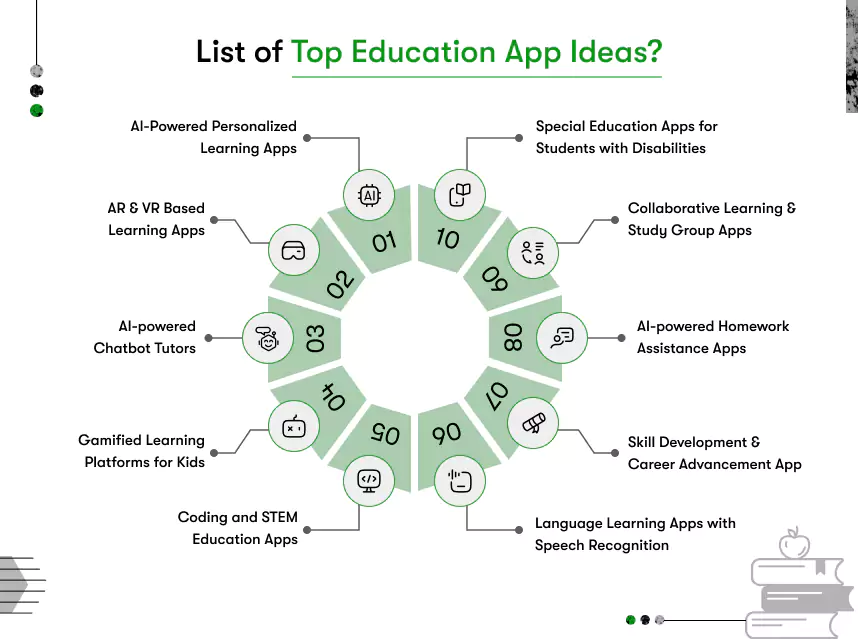
- Education and training
- Adaptive tutor that personalizes practice and feedback.
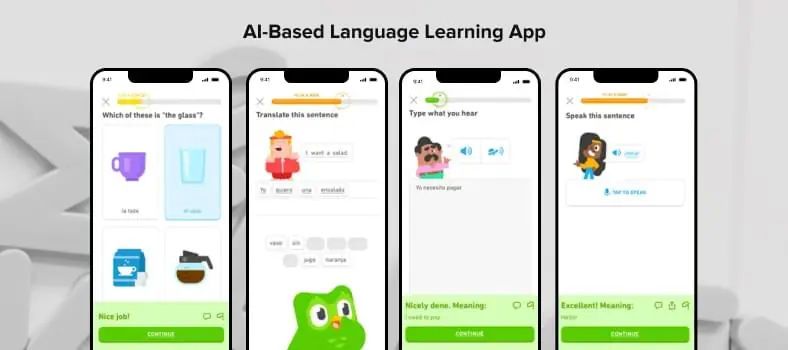
- Language learning app with pronunciation scoring and correction.
- Microlearning push notifications tailored to progress.
- Developer and ops tools
- Code review assistant that suggests fixes and security checks.
- Automated incident summarizer that extracts root causes.
- Test case generator from user stories.
Each of these ai app ideas can start small and grow. Pick one that matches your data access and domain knowledge for the fastest results.
How to validate ai app ideas quickly
Validation saves time and money. Use these steps to test ai app ideas before heavy investment.
- Define the user problem in one sentence.
- Build a prototype with simple rules or small models.
- Run a Wizard of Oz test to simulate intelligence without full automation.
- Collect qualitative feedback from 5–10 real users.
- Measure a key metric that shows value (time saved, clicks reduced, revenue).
When I tested a voice note transcriber idea, the Wizard of Oz step revealed users cared more about search than verbatim transcripts. That insight changed the product and boosted engagement.

Technical roadmap: from prototype to product
This roadmap helps teams build reliable AI features without getting lost in research.
- Data and labeling
- Start with a small labeled set. Label the most common 1,000 examples first.
- Use active learning to expand labels efficiently.
- Model selection
- Begin with prebuilt APIs or small fine-tuned models.
- Move to custom models only when needed for performance or control.
- Infrastructure
- Use serverless or managed ML hosting to reduce ops cost.
- Implement versioning for models and datasets.
- Testing and evaluation
- Combine automated tests with human review on edge cases.
- Monitor drift and model performance in production.
- Deployment
- Roll out to a small percent of users first.
- Provide clear fallbacks when the model is uncertain.
A practical stack I used: fine-tune a small transformer, host with a managed inference service, and route uncertain queries to a human-in-the-loop. This reduced false positives by half.
Monetization strategies for ai app ideas
Choose a model that fits user value and product shape. Common options include:
- Subscription fees for ongoing value and updates.
- Usage-based pricing for heavy compute features.
- Freemium with paid advanced features or higher limits.
- Marketplace or transaction fees for matching and recommendations.
- Enterprise licensing with dedicated support for large customers.
I recommend starting with a pricing experiment early. Offer pilot accounts with feedback sessions. That builds revenue and product-market fit simultaneously.
Ethical, privacy, and legal considerations
AI apps can create bias or privacy risks. Address these proactively.
- Data minimization: collect only what you need.
- Consent: make data use clear and easy to opt out of.
- Bias audits: test models across demographics and scenarios.
- Explainability: provide simple reasons for key decisions.
- Compliance: follow regional rules for health, finance, or biometric data.
I once halted a feature after a fairness test flagged unequal outcomes for certain groups. Fixing that early saved reputational damage later.
Measuring success and scaling AI features
Track the right metrics and scale thoughtfully.
- Product metrics: task completion rate, time saved, conversion lift.
- Model metrics: precision, recall, F1, and confidence distributions.
- Business metrics: churn, retention, and revenue per user.
- Operational metrics: latency, error rate, and cost per inference.
Scale only after metrics show consistent value. Automate monitoring and alerts for data drift and unusual error spikes.
Tools and data sources to accelerate development
Use these resources to move faster without reinventing the wheel.
- Pretrained models and APIs for common tasks.
- Open datasets for domain bootstrapping.
- Labeling platforms and human-in-the-loop services.
- Managed inference and MLOps platforms for deployment.
Combining existing models with targeted fine-tuning gave my team production-ready results in weeks, not months.
Common pitfalls and how to avoid them
Learn from mistakes others make with ai app ideas.
- Chasing novelty over value. Focus on user outcomes first.
- Underestimating data cleanup. Spend time on quality early.
- Ignoring edge cases and fairness. Test across groups and inputs.
- Over-optimizing for metrics that don’t reflect user value.
When you avoid these traps, you get faster learning and a better product.
Frequently Asked Questions of ai app ideas
What makes an ai app idea worth pursuing?
An idea is worth pursuing if it solves a clear user problem and you can access or collect the needed data. Test with a simple prototype and feedback loops before building heavy infrastructure.
How do I start with no data?
Begin with small labeled samples, synthetic data, or use public datasets. Wizard of Oz tests can simulate intelligence to validate demand while you gather real data.
Which technology stack is best for AI apps?
Start with managed APIs and move to fine-tuned models when needed. Use serverless or managed MLOps to reduce operational burden. Match tools to team skills and budget.
How can I ensure my AI app is fair and safe?
Run bias tests, collect diverse data, and add human review for sensitive decisions. Be transparent about limitations and provide user controls.
How long does it take to build a usable AI feature?
A focused MVP can take weeks to a few months depending on data and complexity. Time is shorter if you use pretrained models and simple UX.
Conclusion
You can turn practical ai app ideas into real products by starting small, validating fast, and focusing on user value. Use clear metrics, protect user privacy, and iterate based on real feedback. Take one small idea from this list, build a quick prototype, and learn from users—this simple loop leads to the best outcomes. Share your progress or questions below and consider subscribing for more practical AI product advice.
